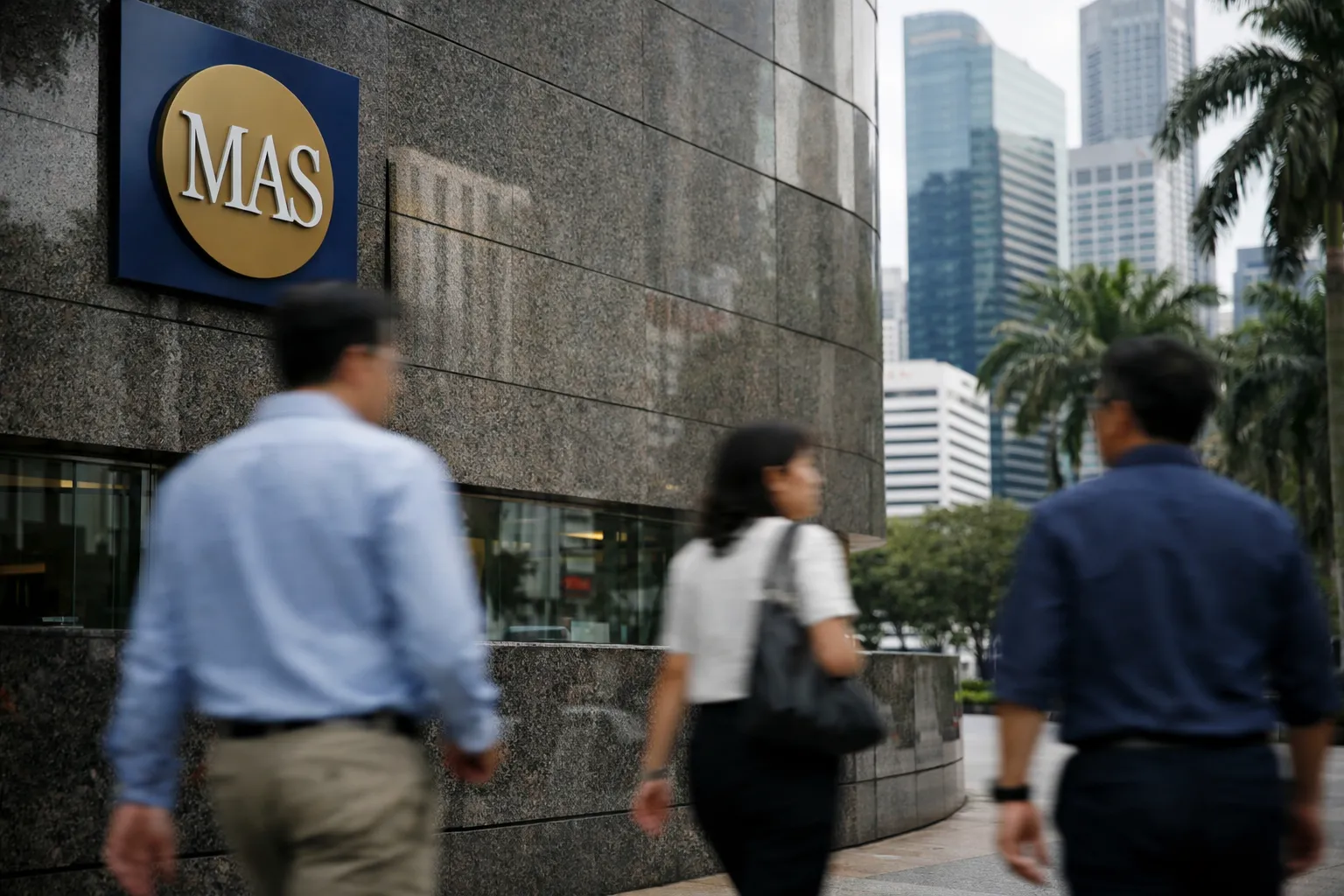
Singapore’s Monetary Authority (MAS) this month issued a set of binding requirements for licensed cryptocurrency trading venues that mandate on‑chain proof‑of‑reserves (PoR) protocols, independent certification of algorithmic trading systems, and enhanced market surveillance. The rules, aimed at reducing custody and market‑integrity risks, represent one of the most specific market‑structure interventions by a major regulator to date and will reshape operational practices for venues that serve professional traders and retail users alike.
What MAS is requiring
Under the new regime, bespoke to licensed digital asset exchanges and trading venues supervised by MAS, firms must:
- Publish verifiable on‑chain proof‑of‑reserves at least once daily, using cryptographic methods that provide per‑asset and per‑liability granularity (MAS recommends Merkle‑tree commitments and supports ZK‑friendly attestations).
- Submit to quarterly independent attestations by recognized auditors that validate custody segregation, reserve reconciliations and the integrity of PoR processes.
- Obtain certification for algorithmic trading systems from accredited third‑party labs. Certification covers pre‑deployment code review, simulated stress testing (including flash‑crash and liquidity‑shock scenarios), and verification of mandatory kill‑switch and throttling controls.
- Deploy continuous market‑surveillance tooling that reports anomalous order flows, wash trading flags and quote‑spam patterns to MAS within predefined timelines.
Scope and timeline
MAS’s requirements apply to licensed trading venues offering spot trading, tokenized derivatives and leveraged products. Custodians that provide services to those venues must also meet enhanced segregation and attestations. Firms have been given a phased implementation timeline: basic on‑chain PoR publication and surveillance upgrades are required within six months; full auditor attestations and algorithmic certification are required within 12 months.
Technical standards and audit expectations
Rather than prescribe a single cryptographic method, MAS’s guidance specifies minimum technical properties: PoR attestations must allow third parties to verify that (1) assets claimed on‑chain correspond to off‑chain accounting, (2) proofs are non‑interactive and tamper‑evident, and (3) client balances cannot be inferred beyond necessary aggregation. MAS explicitly references Merkle‑tree constructions as a pragmatic baseline and encourages voluntary adoption of succinct zero‑knowledge proofs where operationally feasible.
For algorithmic trading certification, MAS requires independent labs to document source‑code integrity, run backtests across market‑impact scenarios and confirm the presence and effectiveness of emergency stop mechanisms. Certification must be refreshed annually or after any material code change.
Why MAS moved now
Regulators and market participants have grown increasingly concerned about systemic risks from custody opacity and uncontrolled algorithmic strategies. MAS framed the move as an effort to protect retail investors, prevent contagion from solvency surprises and strengthen Singapore’s standing as a safe, regulated crypto trading hub. The regulator also cited the need to align disclosure and operational standards for crypto venues with established practices in equities and derivatives markets.
Market reaction
Initial market response was mixed. Several licensed regional exchanges confirmed they will accelerate PoR tooling and pursue independent audits; others warned of higher compliance costs that could squeeze margins on low‑fee order books. Trading desks we spoke with said the rules will help professional liquidity providers by reducing counterparty risk, but they expect short‑term fragmentation as some smaller venues opt to delist leveraged products rather than absorb certification costs.
On the trading desk level, the requirement for certified algo systems is expected to change how execution algorithms are developed and deployed. Traders who run proprietary high‑frequency strategies anticipate longer lead times for code changes and reduced frequency of rapid parameter tuning; in turn, this could modestly raise realized spreads in the most competitive pairs on Singapore‑licensed venues.
Implications for global traders and liquidity
While the rules are jurisdictional, their practical effects will be felt beyond Singapore. Global venues that target Singapore users or partner with local custodians may choose to adopt similar PoR and certification practices proactively to ease market access. Conversely, the increased compliance burden could accelerate migration of very low‑margin order flow to unregulated or offshore venues, raising coordination challenges for cross‑venue arbitrageurs and market‑makers.
What traders should do now
- Assess counterparty exposure: review which venues in your execution set are licensed in Singapore or rely on Singapore‑based custody partners.
- Demand transparency: favor venues publishing machine‑readable PoR data and independent audit reports.
- Monitor latency and execution metrics: expect temporary changes in liquidity depth and spreads during the compliance transition.
- Prepare for changes to algos: if you run algorithms that connect to Singapore‑regulated venues, factor in longer certification cycles and tighter pre‑deployment testing requirements.
Bottom line
MAS’s new rules mark a concrete step toward formalizing operational and disclosure expectations for crypto trading venues. For traders, the immediate effects will be a mix of improved counterparty assurance and transitional liquidity frictions. Over the medium term, the measures could nudge the market toward greater standardization in proofs, audits and algorithm governance—changes that professional trading desks generally welcome, even if implementation is costly.