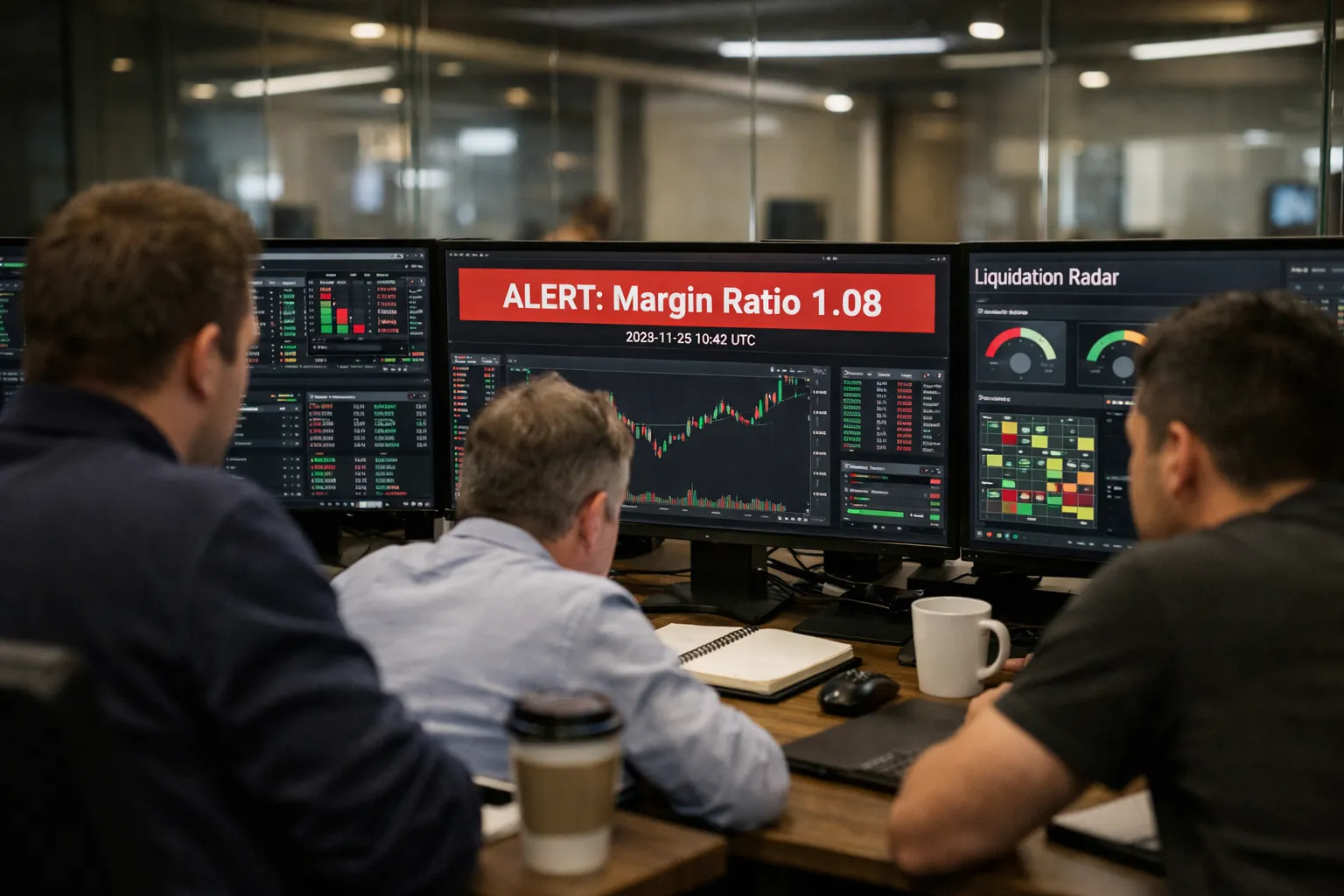
As perpetual contracts continue to migrate off mainnet and onto an expanding set of Layer‑2s and specialized venues in 2026, traders face a practical choice: route exposure through concentrated‑liquidity AMM perpetuals (AMM perps) or through central limit order book (CLOB) perpetuals (including on‑chain order books and CEXs). This analysis dissects observable differences in liquidity provision, funding‑rate behavior, realized slippage, and operational risk — and translates those differences into actionable rules for intraday and swing traders.
Why the comparison matters now
Through 2024–2026 the market has seen two key shifts: proliferation of concentrated‑liquidity AMM designs for perps on Arbitrum, Base and zkSync Era, and continued growth of high‑throughput CLOB perps on optimized venues and centralized exchanges. Each design targets capital efficiency, but they deliver different cost and risk profiles once market stress, funding cycles, and execution size are considered. For active traders, choosing the wrong venue for a strategy can mean materially higher slippage, margin costs, or liquidation risk.
Core structural differences
- Liquidity architecture: AMM perps pool liquidity into concentrated ranges and automated virtual inventories; CLOB perps aggregate discrete bids/offers submitted by market makers and institutional LPs. AMMs offer continuous pricing formulas, CLOBs offer discrete depth at price levels.
- Price discovery: CLOBs reveal posted intent (limit orders) and therefore typically provide deeper visible tight spreads for small‑to‑medium sizes. AMMs expose implied depth through curve parameters and concentrated ranges, which can appear deep but may thin quickly outside the range.
- Capital efficiency and fees: AMMs can be more capital efficient for LPs (concentrated liquidity), enabling narrower quoted curves and lower maker fees for small trades. CLOBs reward explicit market making and can offer rebates or lower taker fees for high‑volume participants.
- Funding dynamics: Funding on AMM perps is often algorithmically linked to on‑chain mark and index prices; CLOB perps may have funding derived from composite indices and larger institutional flows, producing different amplitude and persistence in funding spikes.
Liquidity and slippage in practice
Two practical patterns emerged in 2026 market data and trader reports:
- Small, frequent trades (sub‑1% of 24‑h volume) — AMM perps generally offer tighter executed costs because the concentrated curve provides depth close to mid. For aggressive market orders up to the concentrated range, realized slippage can be competitive with CLOBs once gas/settlement overhead is accounted for.
- Mid to large trades (1–5% of 24‑h volume) — CLOBs outperform due to visible depth and layered order books. Once an AMM trade steps outside the concentrated range, marginal price impact grows non‑linearly and slippage becomes materially worse than comparable CLOB fills.
Operationally, traders reported that limit‑order strategies that farm the spread are more predictable on CLOBs. AMM LPs provide passive depth but only within the specified range; as volatility expands, LPs re‑range or withdraw, creating sudden depth evaporation and large realized slippage for takers.
Funding‑rate behavior and hedge costs
Funding is the invisible recurring P&L item that tends to erode returns if not actively managed. In 2026, two patterns deserve attention:
- Short, sharp funding spikes on AMM perps. Because AMM perps rely on on‑chain mark calculations that can lag composite off‑chain indices, sudden directional flows (e.g., concentrated buying from retail or bots) can push the AMM mark away from index prices. Funding adjusts algorithmically and can swing faster, producing short but steep funding burns for the wrong side.
- Persistent funding biases on CLOBs during structural flows. CLOB perps — especially on centralized venues with large institutional flow — can display multi‑day funding regimes driven by inventory pressure and macro hedge demand. These regimes are more predictable and thus more easily incorporated into carry strategies.
For traders who hedge underlying spot positions or run basis trades, these differences change the economics: AMM perps may be economical for short duration exposures where funding vagaries are manageable; CLOBs suit multi‑day directional or carry strategies where funding predictability matters.
Front‑run risk, oracle latency and execution safety
AMM perps are native to on‑chain settlement and therefore surface specific on‑chain risks in 2026: oracle latency, sandwiching, and block‑proposer manipulation. While many AMM perps have incorporated mitigations (TWAPs, slippage limits, MEV auction integrations), traders still face occasional large adverse fills when bots exploit transient oracle deviations.
CLOB perps (particularly CEX order books and optimized on‑chain order books) concentrate latency risk off‑chain; execution latency can produce slippage during liquidity vacuums but generally avoids oracle‑driven mark divergence. For larger orders, human‑class market makers and internalization on CEXs offer execution certainty that AMMs cannot guarantee under extreme stress.
Cross‑venue routing and arbitrage costs
Fragmentation across L2s increases cross‑venue routing costs. Bridges introduce settlement delay and fee friction that make intra‑trading arbitrage less frictionless than pre‑2025 assumptions. Traders performing cross‑venue basis or delta‑neutral rebalancing must account for:
- Bridge latency and potential for failed transfers during volatility.
- Funding mismatches across venues due to different mark calculation windows.
- Gas and batching costs that can turn small arbitrage opportunities negative.
As a result, many high‑frequency arbitrage desks now colocate strategies on the same L2 or run hedges within a single venue to avoid cross‑chain risk.
Data‑driven rules for traders (practical)
- Split by trade size: Use AMM perps for tactical, sub‑1%‑of‑daily‑volume market entries where immediate execution is valuable; route larger chunks to CLOBs and aggregate fills via auction/TWAP.
- Monitor on‑chain mark vs composite index: If AMM perps show mark deviation >X basis points vs consolidated index over a short window (adjust X to asset volatility), prefer CLOB fills until normalisation.
- Hedge funding risk: For multi‑day positions, prefer venues with historically persistent funding curves; for intraday, accept AMM funding volatility but size positions to absorb temporary spikes.
- Limit order layering: Use limit orders on CLOBs to capture the spread for medium‑sized trades; use slippage limits on AMMs and simulate curve impact before sending large taker orders.
- Consolidate inventory where possible: Keep hedges on the same L2 to minimize bridge risk and execution latency.
Case study snapshots (qualitative)
Across Q2–Q3 2026, several episodes illustrated the tradeoffs. In one volatility event, an AMM perp on a major Arbitrum protocol saw mark divergence as a high‑frequency liquidity sweep pulled LP range positions; short sellers paid elevated funding and experienced outsized slippage when re‑entering positions. Conversely, a CLOB venue showed deeper restatement of liquidity as professional market makers stepped in, enabling large institutional fills with narrower realized impact despite wider quoted spreads during the panic.
What to watch next (policy and product shifts)
Three developments will affect the landscape through 2027:
- Increased integration of off‑chain matching engines and on‑chain settlement (hybrid CLOBs) — this could marry CLOB depth with on‑chain finality and reduce cross‑venue routing.
- Standardization of mark and funding index windows across L2s to compress funding dispersion and reduce arbitrage friction.
- Improved LP tooling for dynamic re‑ranging that reduces sudden depth evaporation in AMM perps, which would make AMMs more robust for larger trade sizes.
Conclusion
AMM perps and CLOB perps are not interchangeable tools — they are complementary. In 2026 the decision comes down to trade size, horizon, and tolerance for funding and oracle risk. For the active trader: treat AMM perps as efficient, low‑friction venues for small tactical trades and fast scalps, but route larger, horizon positions through CLOBs or hybrid venues where visible depth and predictable funding reduce execution and carry costs. Maintain on‑chain monitoring for mark divergence, consolidate inventory across L2s where possible, and size positions to weather short funding spikes. The next wave of hybrid matching and standardized indices may blur the lines, but for now, tactical venue selection remains a core edge in crypto perpetual trading.